Oklahoma City · Snap-On Implant Dentures

Finally, a denture that stays in place.

Most dentures today are still made the way they were fifty years ago: a tray of goop, a wax rim, teeth picked out of a cabinet. Held on with spit and a prayer. When the world has moved to 4K, why are dentures still in black and white?

Here, we start with a face scan and a mouth scan. Your teeth and bite are set to your face, on the screen, before anything is made. The teeth are designed for you, not pulled off a card.

Healing dentures are printed here so we can quickly make changes as you heal. The snap-on final is milled offsite — denser and tougher than a poured plate — and it snaps onto four implants instead of relying on a seal or glue.

We have made this page to detail things we discuss in our initial consult. Read it, watch the video, or text us and we can go over the process in person.

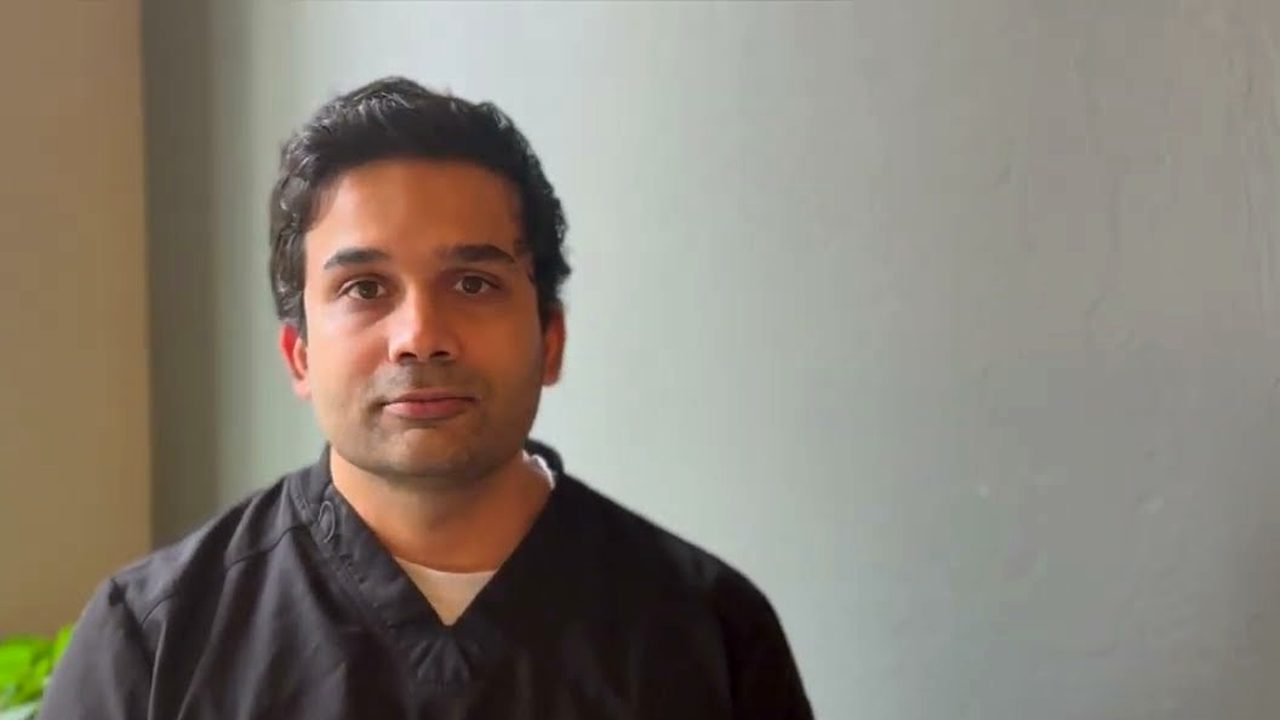
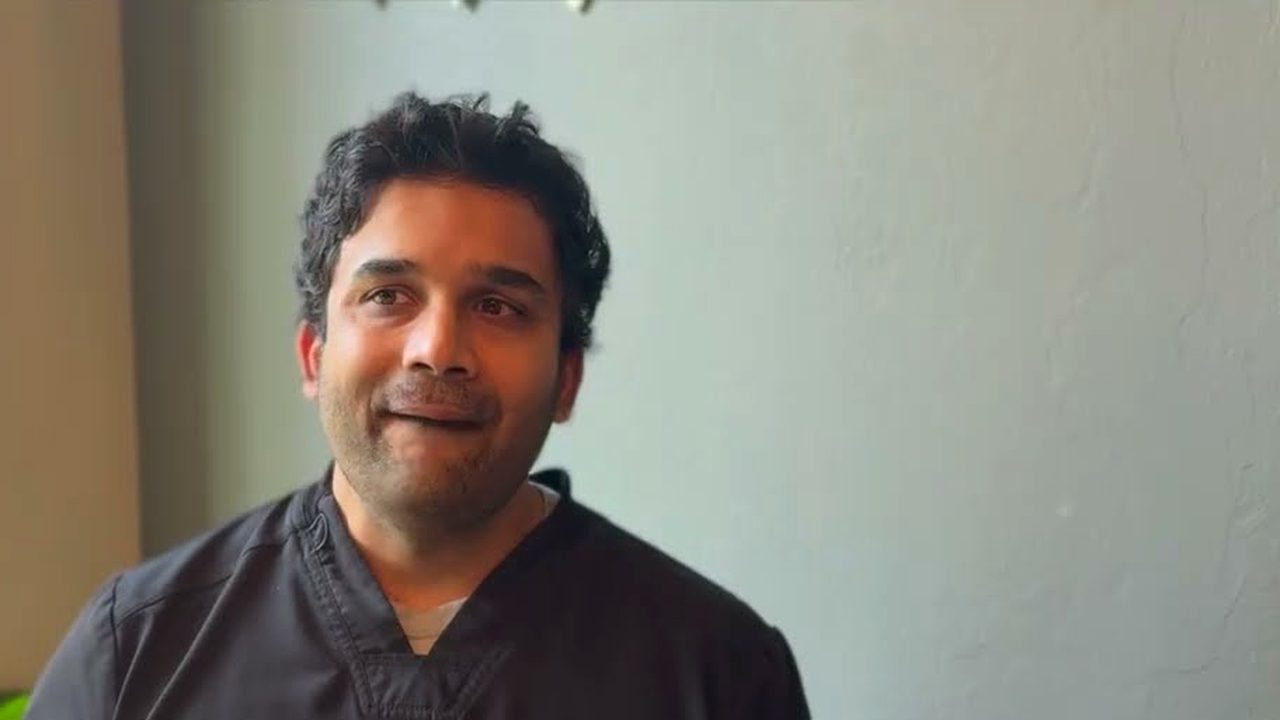
Dr. B at the office on NW 58th, walking the page end to end. About three minutes: what is here, what it costs, and how to reach us.
1,000+
dentures delivered
1,000+
implants placed
Digitally crafted
from 3D face + mouth scans

01 · The Problem

Two arches. Only one of them can hold a seal.

Dr. B, on why it stops staying in — and what changes with four implants. About a minute. The article does not narrate the demo.

Suction is the whole trick up top. On the bottom there is nothing to hold on to.

There is only so much you can do with plastic and spit.

The holy grail for an upper denture is suction. Suction needs an airtight, watertight seal. Think of a suction-cup hook on a shower wall, or a dart on a window: no air under it, it stays.

An upper can sometimes have suction because the roof of the mouth is firm, relatively dry, and large enough to make a seal. That is the one place in the mouth a plate can actually suck.

The floor of the mouth is the opposite. Saliva enters under the tongue. There is less room, the tissue is soft and moves when you talk, and the glands keep everything wet. The tongue is not a static object. There is no seal to make on the bottom.

Most people can live with an upper denture. A few cannot. A full palate is what sets off a gag. Bite on the front teeth only and the back of the plate drops — the seal is gone. Cover the roof of the mouth and food tastes muted. So even the arch that can suck comes with a list.

On the bottom, nothing holds except glue, and only for a while. Bone under a denture behaves like a leg that has been on crutches for decades: it is not being used the way bone is meant to be used, so it shrinks. Last year’s fit becomes this year’s loose plate. Nothing warped. The ridge got smaller than the denture it was made for. Relines buy a little quiet. More adhesive is how a lot of people put the conversation off.

Four implants change the job from suction to hardware. Next section.

02 · The Solution

Four points. Sometimes more. No more wobble.

“Before implants, I used to worry about if my dentures would stay in when I went out. Now, I just worry about if the food will be good or not.”

It stays because it snaps onto metal.

Snap-on dentures have attachments in them. The implants in your jaw carry the matching pieces. You press. It clicks. That click is the whole product: the plate is locked to four (or more) fixtures instead of hanging on glue or a wet seal.

Before that, the day is organized around whether the denture will drop.

We do not quote two implants as the bargain version of this page.

Two implants can hold a lower steady enough to feel like an improvement. They also let it rock, like a table on two legs.

This office does implants all day. That is why four is what we plan, and why we will often place four where another office stops at two. When the bone is there, we place five or six. More points, less tip, same snap. Two happens here sometimes. It is not the offer on this page, and it is not what the number later is written against.

The denture still comes out every night to clean. That does not change, and it is not supposed to.

How the denture itself gets designed — face and mouth on the same screen — is next.

03 · Digital Workflow

Scans. Design on screen. Printed guides. Printed healing. Milled finals.

Set to your face, not guessed from a stone model of your gums.

Digital impressions

Most dentures still start with a tray of goop. Here it starts with a scan of your mouth and a scan of your face, merged on the same screen. You see the teeth on your face before anything is made.

The mouth scan is fit: the ridge, the tissue, where the arch actually sits. Goop pulls, slumps, and distorts. A scan is thousands of frames checked against each other. That is the difference.

Digital design

The face scan is the part a mold cannot know. It sets the midline so the front teeth sit on your face, and the cant so the bite is level with your eyes. That is the difference between a plate that is technically correct and a plate that looks like it came with you.

The face scan sets the midline and the cant. A mold cannot know either one.

Nothing gets made until you have looked at the design on the screen and said so.

Surgical guides

Where the implants go is worked out on the screen at the consult, then carried into the room on a printed guide.

The guide is how the surgery stays small: the holes are decided before the flap, not during it.

Digital manufacturing

Two ways of making it, for two stages.

Printed here

Healing still moves, so immediates, try-ins, and every denture before the final are printed. Printing is for the stretch when the answer keeps changing. We print until the design is locked. Once it is locked, that file stays here.

Milled final

The final is a strength job. It is milled offsite from the same file — denser than a poured plate, teeth that are not pulled off a card. We do not mill here. Yet. Printing and milling are different jobs. We do not pretend they are the same trick.

We print while things change; we mill the final — we don’t pack acrylic the old way.

Traditional approach

Packed acrylic

  • Designed from face scan + mouth scan (not a stone model)
  • No hand-packed plaster / goop tray mold
  • You see the design before anything is made
  • Immediates easily revised in-office during healing period
  • Final milled offsite from a locked file
  • Same saved file for a future replacement
  • Healing dentures / try-ins in days, not weeks
  • Custom teeth - not pulled off a stock card
  • Teeth are one piece, not individual (less breakage and teeth falling off)

Digital approach

Printed here
  • Designed from face scan + mouth scan (not a stone model)
  • No hand-packed plaster / goop tray mold
  • You see the design before anything is made
  • Immediates easily revised in-office during healing period
  • Final milled offsite from a locked file
  • Same saved file for a future replacement
  • Healing dentures / try-ins in days, not weeks
  • Custom teeth - not pulled off a stock card
  • Teeth are one piece, not individual (less breakage and teeth falling off)
Milled final
  • Designed from face scan + mouth scan (not a stone model)
  • No hand-packed plaster / goop tray mold
  • You see the design before anything is made
  • Immediates easily revised in-office during healing period
  • Final milled offsite from a locked file
  • Same saved file for a future replacement
  • Healing dentures / try-ins in days, not weeks
  • Custom teeth - not pulled off a stock card
  • Teeth are one piece, not individual (less breakage and teeth falling off)

Next: what the visits actually look like — records, surgery day, healing, and the milled final.

04 · The Process

One surgical visit. Healing as long as your bone needs. Then the milled final.

The ProcessSnap-On Path

Nothing gets made until you have looked at the design on the screen and said so.

The first visit is a CT scan and a conversation. We look at your bone and your bite on the screen with you, and you leave knowing which fork you are in and what that arch costs. Then go home and think about it.

Most dentures still start with a tray of goop. Here it starts with a scan of your mouth and a scan of your face, merged on the same screen. You see the teeth on your face before anything is made.

The mouth scan is fit: the ridge, the tissue, where the arch actually sits. Goop pulls, slumps, and distorts. A scan is thousands of frames checked against each other.

The face scan sets the midline and the cant. Where the implants go was decided at the consult, not on the morning of surgery.

The number, written down, with nothing added at the chair.

05 · Aftercare

What the denture needs from you at home. What we stand behind after that.

After we place implants, we consider ourselves co-owners. That’s our aftercare promise.

It still comes out every night — that part does not change. What’s new at this stage is what you clean it with, what you clean around it, the yearly visit that keeps the snap healthy, and what we warranty if the denture itself fails.

Daily care

Clean the denture with Dawn dish soap, not toothpaste — toothpaste is abrasive enough to dull the surface over years of brushing. Keep it dry when it’s out of your mouth. Around the implants themselves, use a water flosser with a one-to-one mix of chlorhexidine and water. That’s what keeps the tissue at the abutments healthy, not just the plastic above it.

The yearly visit

Once a year we replace the denture inserts — the snap-on parts that wear with normal use. Same visit: a checkup on the implants, and a cleaning built for implant dentures, not a generic recall. The inserts are meant to be replaced on a schedule. That is maintenance, not a failure of the denture or the implants.

The warranty

We warranty the denture for six years if teeth fall out of it or it breaks. The inserts are not that warranty — they are the yearly visit. If a denture is ever lost, the fix still follows the same rule as elsewhere on this page: replaced from the saved file, not a new impression.

06 · Pricing

The menu, written down.

One price for the arch. Nothing added at the chair.

The number is the package: four implants (five or six when the bone is there), the surgical work your anatomy needs, sedation, healing dentures and try-ins, and the milled snap-on final. Nothing gets added once you sit down.

The only thing that changes the starting price is whether you already wear a denture or still have teeth. That is the first question we ask. Read the fork you are in and skip the other one.

Already wearing a denture

Your current denture is your healing denture through treatment.

$7,500

One arch

Four implants and a milled final snap-on. You keep your current denture as the healing denture.

$15,000

Both arches

Four implants per arch and milled final snap-ons. Your current dentures serve as healing dentures.

$9,000

Combo: upper + lower snap

New digital upper denture plus a four-implant snap-on lower.

Still have teeth

Teeth out, healing dentures, then the same snap.

$9,000

One arch

Remaining teeth removed, healing denture, four implants, milled final snap-on. Extractions, graft, bone smoothing, torus, and sedation for that arch are included.

$18,000

Both arches

Same path on both arches. Four implants per arch.

$12,000

Combo: upper + lower snap

New digital upper denture plus a four-implant snap-on lower. Remaining teeth removed and healing as needed for this path.

Not ready for implants yet

Extractions and healing dentures

$3,000 one arch / $6,000 both. The teeth are removed and healing dentures are delivered, leaving the arch ready for implants when you are.

Payment

  • No insurance. We do not participate with insurance plans. You receive a detailed receipt you are welcome to file with your carrier.
  • CareCredit. You apply directly at carecredit.com/go/624QDK. We text you that link.
  • In-house. Half down, and half before your final dentures are delivered.

If you would prefer an arch that does not come out, All-on-X is available at $25,000 per arch.

07 · Straight Answers

Asked plainly. Answered the same way.

These are the questions we usually get asked.

No. Already in a denture: that one stays as the healing plate. Teeth coming out: we print an immediate here and you leave with it in.
Yes. One arch is $7,500 if you already wear a denture. Still have teeth, or both arches, and the package changes. Your current plate becomes the healing denture. Text us which one you are.
No. Not yet. We print immediates, try-ins, and healing dentures here from a face scan and a mouth scan. The final is milled offsite from the same design you already wore while you healed. Milled teeth are stronger and far less likely to break.

08 · Dr. B

Dr. Abhinav Bhatnagar

Dr. B has been an Okie for eleven years, and the last five have been implants and dentures. He has placed more than a thousand implants and delivered more than a thousand dentures. That number accumulates one arch at a time. It is the only credential on this page.

He was designing and 3D-printing his own surgical guides over a decade ago. Today he builds dentures from a face scan and a mouth scan instead of a tray of goop. Where the implants go is worked out on the screen at the consult, then carried into the room on a printed guide.

He leaves the country more than once a year to teach or to learn. The guides, the face scan, and what happens in the chair come back with him.

The guide is how the surgery stays small: the holes are decided before the flap, not during it.

The plan exists before the morning. That is the job.

Dr. Abhinav Bhatnagar, Digital Dental Solutions, Oklahoma City
Dr. B in Portugal — where All-on-X originated — during training.

Where it is, and what happens next.

2816 NW 58th St Ste 105, Oklahoma City.

2816 NW 58th St Ste 105, Oklahoma City, OK 73112
Get directions

Tuesday
8:00 am – 4:00 pm
Thursday
8:00 am – 4:00 pm
Saturday
By appointment only

The first visit is a CT scan and a conversation. We look at your bone and your bite on the screen with you, and you leave knowing which fork you are in and what that arch costs. Then go home and think about it.

Start with a conversation, not a commitment.

Bring whatever question is actually holding you back.

It is usually the one nobody wants to say out loud, and it usually has a plain answer. You do not have to begin that day, and the ask here is a text, not a phone call.